Wondogenet College of Forestry and Natural Resources at Hawassa University (WGCFNR), in collaboration with JSR Biodiversity Foundation, conducted a multi-stakeholder participation national workshop featuring the role of insect pollinators in ensuring food security and safeguarding the entire ecosystem, May 11 - 12, 2026.
Dr. Teshale Woldeamanuel, Dean of the college, called upon all stakeholders to support the enrichment of the policy brief planned to be prepared from the reseqrch evidence and their feedbacks during the workshop. He urged all stakeholders to commit to saving insect pollinators, the invisible engineers behind biodiversity and environmental protection.
Prof. Fantaw Yimer, Director of Research Affairs at HU, officiated the workshop where he pledged the university's support and commitment to enable the successful project implementation and strengthen further partnerships on such issues of national and global importance.
During the workshop, two senior entomologists, Dr. Firdu Azerefegn from Hawassa university and Prof. Emana Getu of Addis Ababa University, delivered keynote speeches that showcased the staggering importance of insect pollinators in ensuring food security and safeguarding the entire ecosystem.
Dr. Ferdu underlined in his presentation entitled "Insects: the architects of abundance and diversity" that insects are not just small creatures we should get rid of, but the most important part of the ecosystem that ensure pollination of more than 80% of the world's flowering plants.
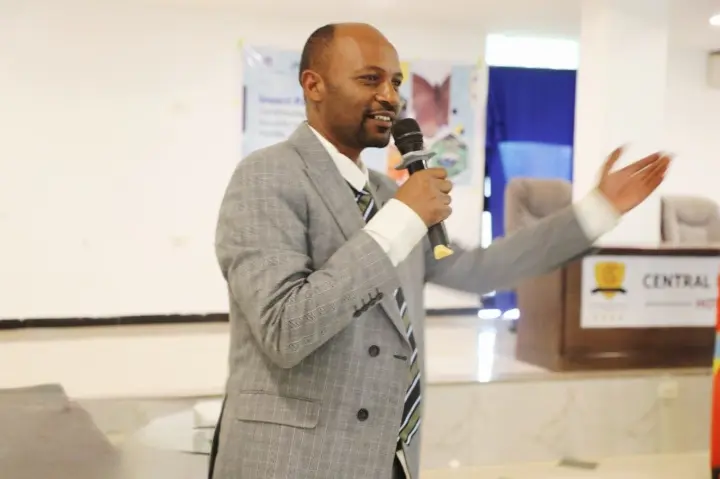
He emphasized that insect pollinators are not only engineers of biodiversity but also bearers of food security and ecological sustainability at large.
Dr. Ferdu pointed out the existence of more than 20,000 bee species that contribute to the pollination of 30% of world food though bees are the often ignored and taken for granted invisible workers.
He underlined the fact that insect pollinators are extremely important creatures highly overlooked and facing destruction because multifaceted factors including habitat fragmentation, intensive monoculture farming, excessive pesticide use, climate change and invesive species.
Prof. Emana Getu also argued against the misconception that insects are the most abundant organisms where the reality is that they are endangered species. He pointed out that insect abundance is a merage among many people who think the opposite. His speech was centered on the role of insect pollinators in crop productivity, yield, quality, genetic diversity, economic importance as well as food security.
He also mentioned that the number and diversity of pollinator species is declining because of research bias and focus on economic aspects rather than looking at the bigger picture of the role of insect pollinators in increasing food productivity and sustaining life at large.
The project PI, Dr. Zerihun Girma and member researchers presented their findings at Kefa Biosphere and Bale Mountain Ecosystem for discussion.
The workshop brought together academics, researchers, policy makers, partners and experts in environmental protection, biodiversity conservation, and food security.