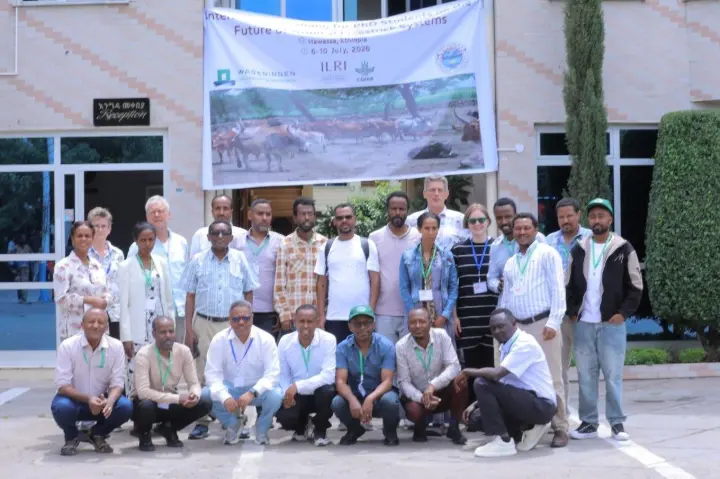
The international PhD training/course on the of future of Tropical Livestock Systems, organized by Wageningen University and Research (WUR), Intentional Livestock Research Institute (ILRI) and Hawassa University (HU), was offered to 20 PhD candidates selected from Ethiopian Universities on a competitive basis and represents multiple regions and organizations across Ethiopia. In addition to the PhD candidates, a postdoctoral staff from Germany was selected for the training held between July 06-10, 2026.
Dr. Sintayehu Yigrem (Associate Professor at Hawassa University), one of the resource experts and local host to the training, explained that this PhD course/training was unique in terms of its theme, training methods and selection of trainers and trainees, and the perfect matching on the time as Ethiopian livestock sector is under progressive transformation process requiring to capture the pillars of sustainability.
Although this is not new to HU, this joint program revitalized the need for further collaborations in academia and research, which is a privilege for HU working with such prominent global academic and research organizations. Dr. Sintayehu implied that the training would fill the gaps in are issues that Ethiopian curricula at PhD and MSc levels.
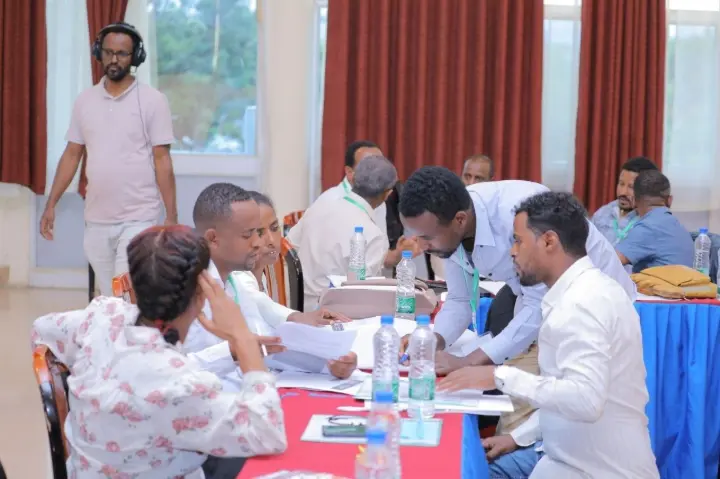
This short course was designed to offer 10 pre-planned and 3 additional expert talks/lectures by senior staff members of the three collaborating institutions. Additionally, trainees were doing case studies which made this training practical on the sustainability pathways of livestock systems. Field visits to various livestock production systems in Sidama region gave opportunities for the senior experts and trainees to understand how various production systems operate and main challenges of the respective production systems. The program also arranged 'debate session' which allowed PhD candidates to critically discuss various options of sustaining livestock systems under various situations and scenarios.
As leading livestock holding in Africa, Ethiopia's livestock sector is at a great cross-road of fulfilling the benefits from the sector (as food security, job creation, investment, GDP) and serving the large majority of Ethiopian population while continued livestock development may have its own trade-offs such as climate change and resource depletions.
During the closing section, it was noted that livestock development plans should not be short sighted, and longer and wider pathways should be carefully taken into account in every stages of planning livestock development. In the training 'system thinking' was the central agenda which should be a continuous process at every stages of planning livestock development, research and teachings.